Finding an eyelash extension manufacturer is easy.
Finding the right product, specification and supply structure for a professional lash brand takes more work.
Allison Lash works with lash brands, distributors, salons and professional beauty businesses sourcing eyelash extension products for wholesale and private label development.
Our approach begins with the product itself: lash type, material, curl, thickness, length and intended market.
Once the product direction is clear, buyers can move into sampling, packaging, private label development and repeat-order planning.
Whether you are launching a new lash brand or comparing suppliers for an existing collection, the goal is the same:
build a product range that your customers can understand, use and reorder.
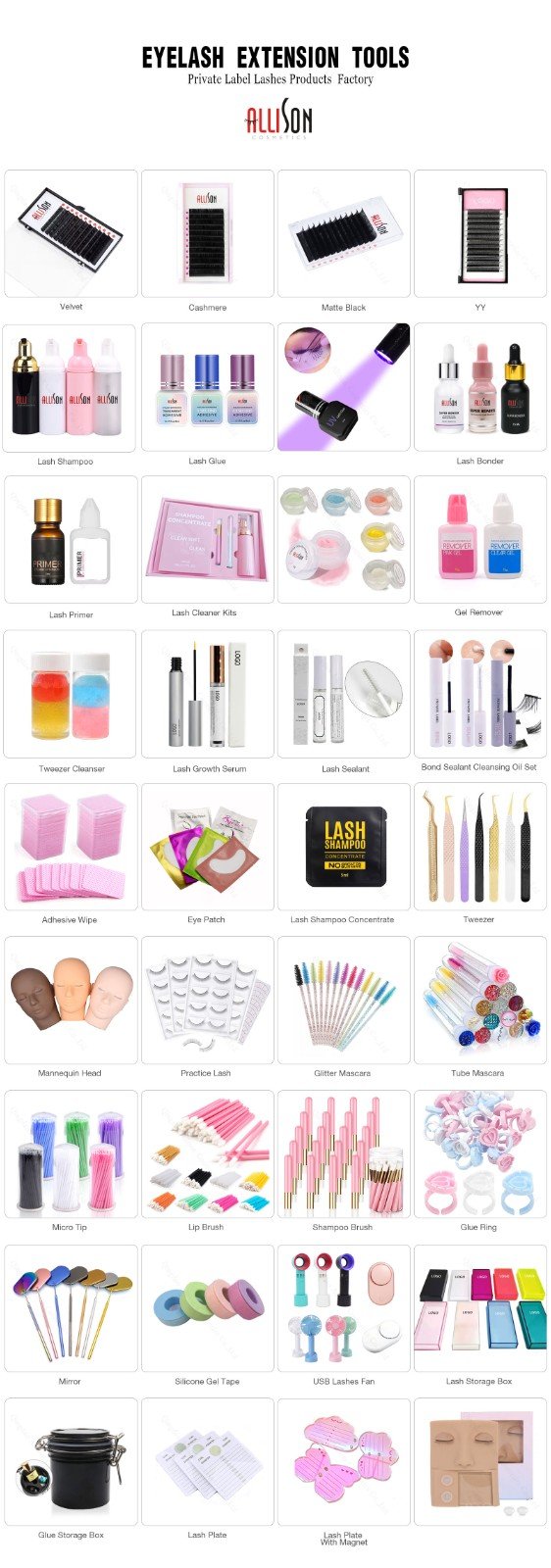
Private label sourcing is often presented as a packaging project.
For professional lash extensions, it should begin with product selection.
Before discussing the box, define:
* Lash type
* Material or finish
* Curl
* Thickness
* Length
* Single-length or mixed-length tray
* Tray format
* Target customer
* Estimated purchasing quantity
For an established brand, the starting point can be even simpler:
send the product you already sell.
A physical reference, product photos or an existing specification list can help make supplier comparison more precise.
Different professional buyers need different product structures.
Allison's sourcing discussions can cover several professional lash categories.
### Classic and Volume Lash Trays
Traditional professional lash trays can be selected according to the required curl, thickness, length and material direction.
For volume collections, commonly discussed thicknesses include:
**0.03 mm / 0.05 mm / 0.07 mm**
Availability depends on the selected product and specification.
Premade fans are a separate sourcing category for buyers building professional volume collections.
Product selection should consider the fan type, curl, thickness, length and tray format rather than treating every premade fan as the same product.
For brands sourcing premade products in volume, sampling should be used to confirm the intended product before private label packaging is finalized.
A professional lash collection may also include adhesive.
Adhesive sourcing should be treated differently from lash tray sourcing because formula selection, working characteristics and applicable product documentation need to be considered before private label packaging is finalized.
professional lash adhesive` → **Private Label Lash Adhesive Manufacturer / OEM Lash Glue
Buyers reviewing adhesive documentation can also read our **Lash Adhesive Safety Documents Guide
The same curl, thickness and length can still produce a different visual impression depending on the material and finish.
Allison currently works with several lash material directions.
### OG Silk
OG Silk is an established product direction for professional lash collections.
### Cashmere / Luxe XE
Cashmere, also referred to internally as Luxe XE, is used as a distinct product direction within Allison's professional range.
### Ultra Matte
Ultra Matte provides another visual direction for brands evaluating a lower-reflection appearance.
Rather than choosing material only from a name, buyers should compare physical samples and decide which finish best matches their intended collection.
Compare the visual positioning of **OG Silk, Cashmere and Ultra Matte lash materials** before selecting your collection.
A professional lash SKU is not defined by one specification alone.
A useful way to think about a tray is:
**Material × Curl × Thickness × Length × Tray Format**
Changing one variable creates a different SKU.
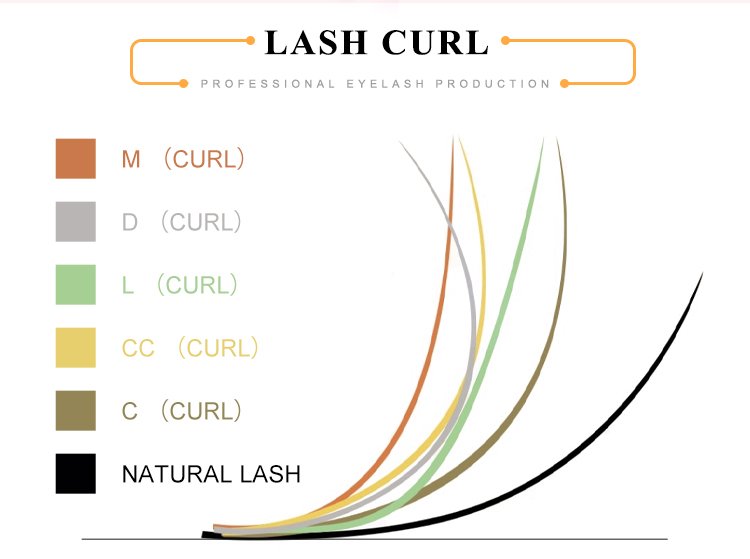
Current commonly supplied curl directions within Allison's professional range include:
**J / C / CC / D / LC / LD / M / U / UBUC**
Not every possible combination should be assumed to be available across every material or product.
Buyers should send the complete intended specification when requesting samples or quotation.
Once the buyer has selected the product, private label development can begin.
Depending on the project, packaging discussions can include:
* Brand logo
* Lash card
* Outer box
* Product series name
* Curl identification
* Thickness identification
* Length identification
* Mixed-length information
* SKU information
* Packaging color direction
* Applicable packaging structure
A growing lash brand may eventually carry dozens of SKUs.
For that reason, packaging should function as a system rather than a collection of unrelated boxes.
Customers should be able to identify the product quickly.
The brand should also be able to add new specifications later without rebuilding the entire visual structure.
Learn how to structure cards, boxes and SKU information in our **Custom Lash Packaging & Private Label Eyelash Packaging** guide.
Ordering random samples is not the most efficient way to evaluate a new supplier.
Each sample should help answer a specific sourcing question.
For example:
**Material comparison**
Which finish best matches the intended collection?
**Curl comparison**
Does the selected curl match the buyer's reference?
**Thickness comparison**
Which specification suits the intended lash technique and customer?
**Packaging comparison**
Does the tray format fit the brand's retail structure?
**Supplier comparison**
Can the new product become a practical replacement or addition to the existing collection?
This makes sampling part of product development rather than simply collecting free products.
An established brand often does not need more product ideas.
It needs a supplier that can understand what is already working.
Send Allison:
* Current product
* Product photographs
* Material or finish
* Curl
* Thickness
* Length
* Tray format
* Current packaging
* Approximate purchasing quantity
* Problems you want to improve
If you have historical purchasing or sales information, it can also help identify which SKUs deserve deeper inventory.
The objective is not to force a successful brand to rebuild its collection.
It is to make supplier comparison more precise.
A new lash brand does not need to launch every possible specification.
A more controlled starting process is:
### 1. Define the Customer
Who will buy the product?
### 2. Select the Core Lash Category
Classic, volume, premade or another professional direction.
### 3. Select the Material Direction
Compare the appearance and positioning of the available options.
### 4. Build the Initial Specification Range
Choose the curls, thicknesses and lengths that matter most to the intended customer.
### 5. Evaluate Samples
Confirm the actual product before building the brand around it.
### 6. Develop Packaging
Create a packaging and SKU system around the approved products.
### 7. Plan the Repeat Order
A successful professional lash product is not only something that can be launched.
It should also be practical to reorder.
A clear sourcing workflow helps both buyer and supplier avoid unnecessary revisions.
**Step 1 — Send the product requirement**
Product type, material, curl, thickness, length and estimated quantity.
**Step 2 — Identify suitable options**
Compare applicable products rather than starting from packaging.
**Step 3 — Evaluate samples**
Review the actual product against the intended specification.
**Step 4 — Confirm the product**
Select the product direction before finalizing branding.
**Step 5 — Develop private label packaging**
Build the card, box and SKU information around the approved product.
**Step 6 — Confirm order details**
Review the final specification and packaging information before production.
**Step 7 — Keep the specification organized for repeat orders**
A clear product record makes future purchasing easier to manage.
A useful first inquiry can be short.
Send:
1. Product type
2. Material or preferred finish
3. Curl
4. Thickness
5. Length
6. Single or mixed tray
7. Estimated quantity
8. Private label requirement
9. Target market
10. Existing reference product, if applicable
This gives Ethan and the Allison Lash team enough information to begin a useful sourcing conversation
Yes. Allison works with professional buyers sourcing eyelash extension products for wholesale and private label projects.
Yes. Applicable private label projects can include product selection, lash cards, outer packaging and SKU information according to the selected product and project requirements.
Professional sourcing discussions can include lash extension trays, premade fans, professional lash adhesive and other applicable lash products.
Common professional volume specifications include 0.03 mm, 0.05 mm and 0.07 mm. Availability should be confirmed for the selected product.
Current commonly supplied curl directions include J, C, CC, D, LC, LD, M, U and UBUC. Availability depends on the selected product and specification.
Yes. Current product directions include OG Silk, Cashmere / Luxe XE and Ultra Matte among other applicable products.
Yes. Established brands can provide product specifications, photographs or physical reference samples to make comparison more precise.
Applicable private label projects can include customized lash cards and outer packaging according to project requirements.
Yes. Premade fans are available as a separate professional sourcing category.
Yes. Allison supports applicable professional adhesive and private label adhesive projects. Formula selection should be discussed before packaging is finalized.
Samples can be discussed according to the product and project. Confirm the required specifications with Ethan before arranging the sample order.
MOQ depends on the product, specification, packaging and customization requirements. Send the intended product and estimated quantity for an accurate quotation.
You do not need a finished product catalog before contacting Allison.
If you already know what you need, send the specification.
If you are changing suppliers, send your current product.
If you are building a new brand, tell us your target market and the type of professional lash customer you want to serve.
Ethan and the Allison Lash team can then organize the discussion around the actual product instead of beginning with a generic quotation.