Professional lash buyers encounter many different product names:
PBT. Korean PBT. Silk. Cashmere. Faux Mink. Matte. Velvet. Satin.
The difficulty is that these words do not always describe the same type of information.
Some may refer to the base fiber.
Others may describe a finish, feel, profile or commercial product collection.
For professional sourcing, separate two questions:
What is the lash made from?
and
How does the finished lash look and perform?
PBT stands for polybutylene terephthalate.
It is a thermoplastic polyester used in many applications, including synthetic fibers.
In professional eyelash extensions, PBT is commonly used as a synthetic fiber base.
However, the word PBT alone does not describe every characteristic of a finished lash extension.
Finished products can still differ in:
- diameter
- profile
- surface finish
- blackness
- flexibility
- taper
- curl
- strip construction
- manufacturing consistency
This is why two lash products described as PBT can still look and behave differently.
“Korean PBT” is a sourcing or origin-related description.
It should not automatically be interpreted as a universal quality grade.
If material origin matters to a professional buyer, useful questions include:
- Who is the material supplier?
- What material specification is being supplied?
- What origin documentation is available?
- Can the material source be connected to the finished lash product?
Country of origin and finished-product quality are related sourcing questions, but they are not the same question.
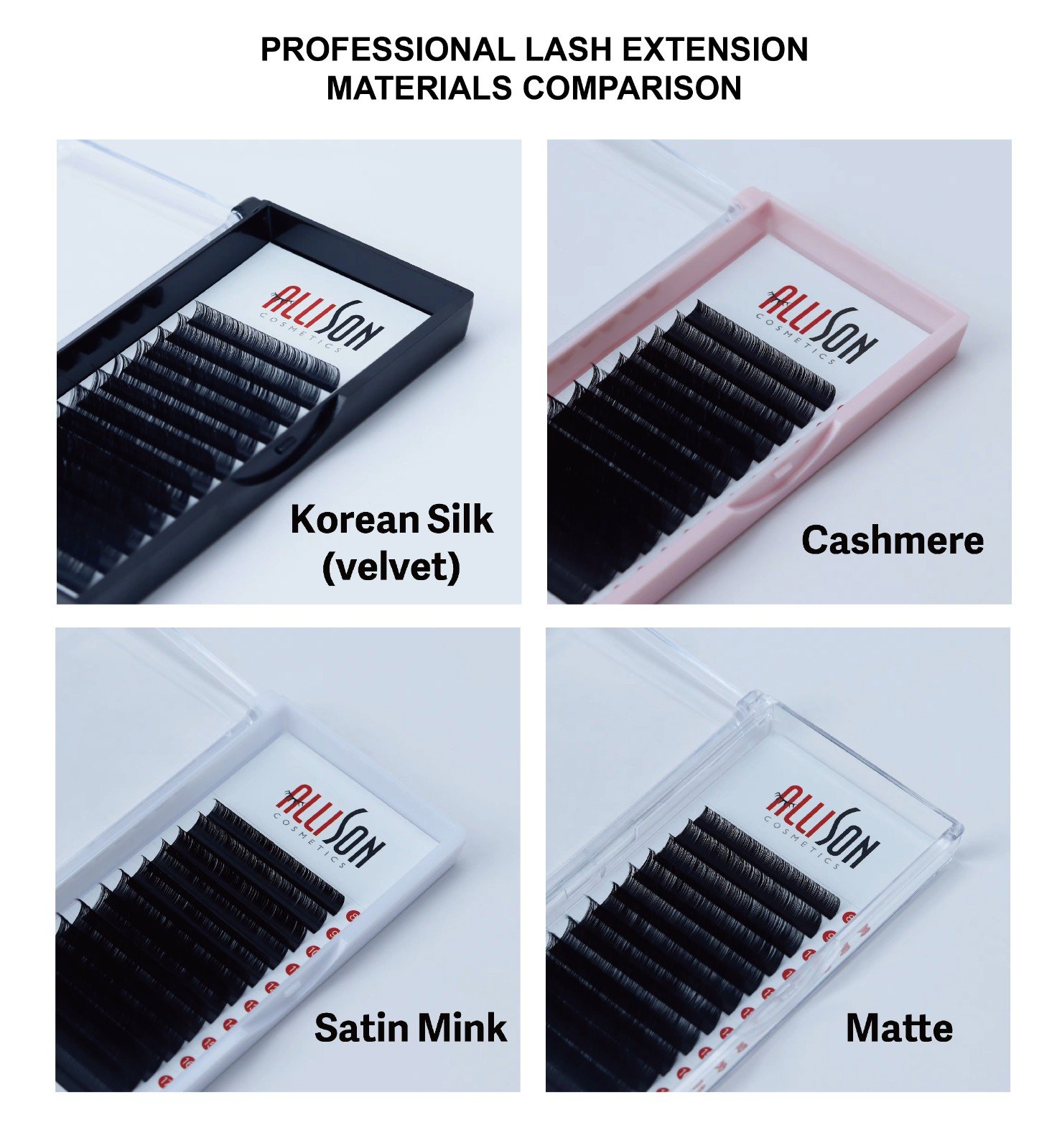
In the professional lash market, **silk** is frequently used as a commercial product or finish description.
The word should not automatically be interpreted as proof that the extension is manufactured from natural silk fiber.
For B2B sourcing, ask for the actual fiber specification of the product.
Cashmere is also commonly used as a lash product-category name.
Different Cashmere products may have different profiles, finishes and fiber specifications.
Professional buyers should evaluate the actual product rather than assuming its material from the collection name.
Matte and glossy describe how a surface reflects light.
For a lash brand, this can affect the visual positioning of a collection.
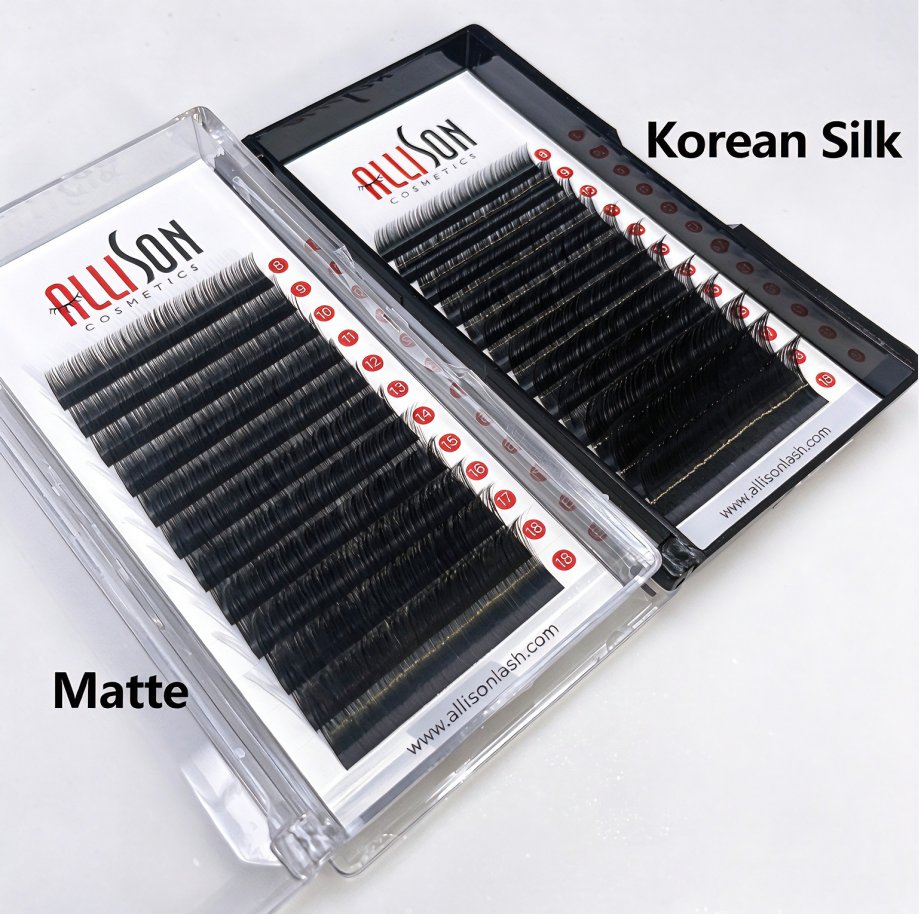
A useful comparison should use:
the same lighting
the same camera exposure
and
physical samples placed side by side.
This prevents photography or editing from becoming the main difference buyers see.
A professional lash collection may use names such as:
Cashmere
Velvet
Silk
Satin
or
Mink-style
to communicate a product direction.
These names can be useful for branding.
But a B2B specification should go further.
Ask for:
- actual fiber information
- diameter
- profile
- curl
- length
- finish
- taper
- tray construction
- SKU structure
| Buyer Question | What to Check |
|---|---|
| What is the base fiber? | Supplier specification |
| Is an origin claim being made? | Supporting sourcing evidence |
| Matte or reflective? | Physical sample |
| Blackness? | Same‑lighting comparison |
| Soft or firm? | Physical evaluation |
| Diameter consistent? | QC / sample inspection |
| Curl consistent? | Multiple strips and trays |
| Taper consistent? | Macro inspection |
| Easy to pick up? | Professional application test |
For Allison private label projects, the first step is identifying the product characteristics a buyer actually wants.
A buyer may prefer:
- a softer visual appearance
- a deeper black appearance
- a more matte finish
- a particular fiber profile
- a particular curl range
- a specific tray format
Once the target product is clear, the material and product specification can be discussed more accurately.
Many professional eyelash extension products use synthetic polymer fibers. Buyers should confirm the exact specification of the product they are sourcing.
The word “silk” is often used commercially in the lash industry and should not automatically be interpreted as a natural-fiber specification.
The product name alone does not establish that.
Country of origin alone does not determine finished-product quality.
Compare the actual fiber specification, finish, blackness, diameter, profile, taper, curl, pickup behavior and consistency.
Yes. Professional buyers can discuss the product characteristics and specifications they want to compare.
Compare Lash Materials for Your Product Line
Tell Ethan what your current lash feels or looks like and what you want to change in the next product.