Allison Lash supplies a handheld UV lash lamp option for professional lash businesses sourcing light-curing eyelash extension systems.
For B2B buyers, a curing lamp should be evaluated as more than a piece of hardware.
The lamp should be considered together with:
The adhesive it is intended to cure
Its actual optical output
The working method
Product documentation
Packaging requirements
Target-market requirements
This helps brands avoid choosing a lamp simply because two products look similar in photos.
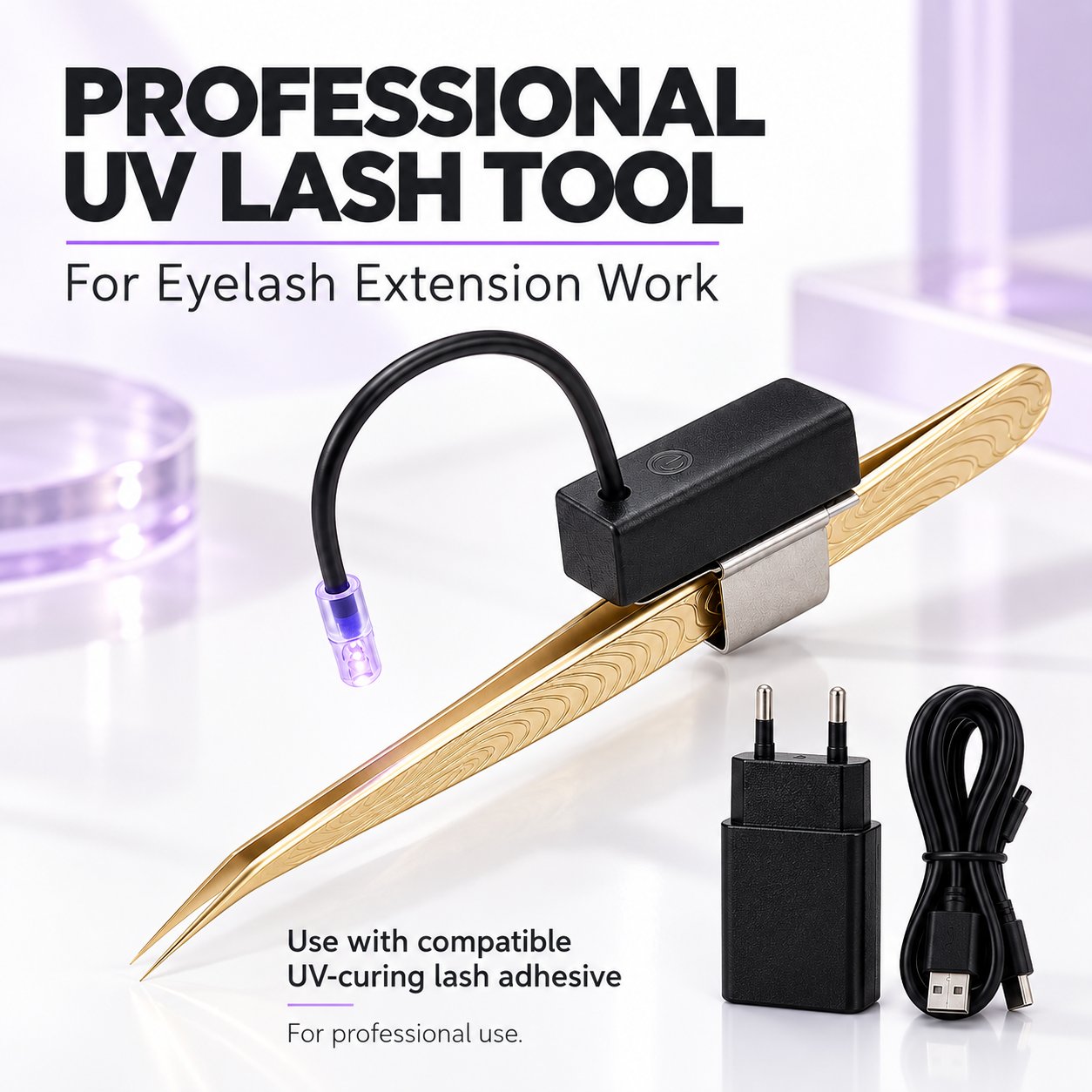
A handheld format gives buyers a different equipment direction from a large fixed lamp system.
For brands evaluating a handheld model, useful purchasing questions include:
How the light is activated
The intended working distance
Beam size
Power source
Actual wavelength information
Applicable curing adhesive
Product packaging
Safety instructions
Available testing documentation
The final purchasing decision should be based on the confirmed product specification rather than appearance alone.
| Product Type | Handheld UV Lash Lamp |
| Peak Wavelength | 400nm‑405nm |
| Spectral Range | 400nm‑405nm |
| Power | 0.5W |
| Power Supply | Built‑in 100mAh lamp battery / Optional 5000mAh power bank |
| Working Distance | 0.5‑2 cm |
| Compatible Adhesive | For UV lash adhesive |
| Private Label | Customization Supported |
1. What Is the Actual Wavelength?
Do not rely only on the visible color of the lamp.
Ask for the product specification and, where available, spectral testing.
2. What Is the Intended Working Distance?
Optical exposure at the working area depends on how the lamp is used.
The intended distance should therefore be part of the product instructions.
3. Which Adhesive Is It Designed to Cure?
The lamp and adhesive should be evaluated together.
4. Has the Optical Output Been Tested?
For professional sourcing, third-party testing can provide stronger evidence than marketing descriptions.
5. What Safety Instructions Are Supplied?
Professional optical equipment should include appropriate instructions for its intended use.
A professional buyer may ask for different documentation depending on the target market and product design.
Useful areas to evaluate can include:
Photobiological Safety
IEC 62471 provides a framework for assessing photobiological safety of lamps and lamp systems.
For a product primarily emitting ultraviolet radiation, **IEC 62471-6** is particularly relevant to UV lamp products.
Spectral Test
A spectroradiometric test can show what wavelengths the product actually emits.
RoHS
For applicable electrical and electronic products sold into the European market, RoHS addresses restricted hazardous substances in electrical and electronic equipment.
CE Documentation
For products entering markets where CE marking applies, the manufacturer should determine which EU legislation and conformity requirements apply to the final electrical product.
A curing light may appear purple, violet or white to the human eye.
That does not provide a complete measurement of its optical output.
For professional buyers, spectral data provides a stronger basis for evaluating the lamp.
This is especially useful when comparing products marketed using terms such as:
UV
UV LED
LED
White LED
395 nm
405 nm
Yes. Allison has a handheld UV lash lamp option for professional lash-system sourcing.
Private label options should be confirmed according to the lamp, packaging and project quantity.
Compatibility should be confirmed before ordering. A UV-curing adhesive and lamp should be evaluated as one system.
Visible color alone does not establish photobiological safety. Buyers should evaluate actual optical output and applicable safety testing.
Depending on the product and market, buyers may ask about product specifications, spectrum, photobiological safety testing and applicable electrical compliance documentation.
Yes. Buyers can discuss applicable UV adhesive and lamp sourcing together with Allison.
If you are developing a UV lash system for your brand, send Ethan your current adhesive requirement, lamp requirement and target market.